

Hearing solutions
Hearing aids and hearing solutions
Every style of hearing aid, plus custom protection and tinnitus assessment — fitted independently, so the recommendation follows your audiogram rather than a supplier agreement.

The short answer
Hearing aids come in three main styles: receiver-in-canal, behind-the-ear and in-the-ear. Which suits you depends on the degree and shape of your hearing loss, your dexterity, and whether you need features like rechargeable batteries or phone streaming. Peak Hearing is independent, so the choice is made on clinical fit, not a manufacturer target.
Which style of hearing aid is right for me?
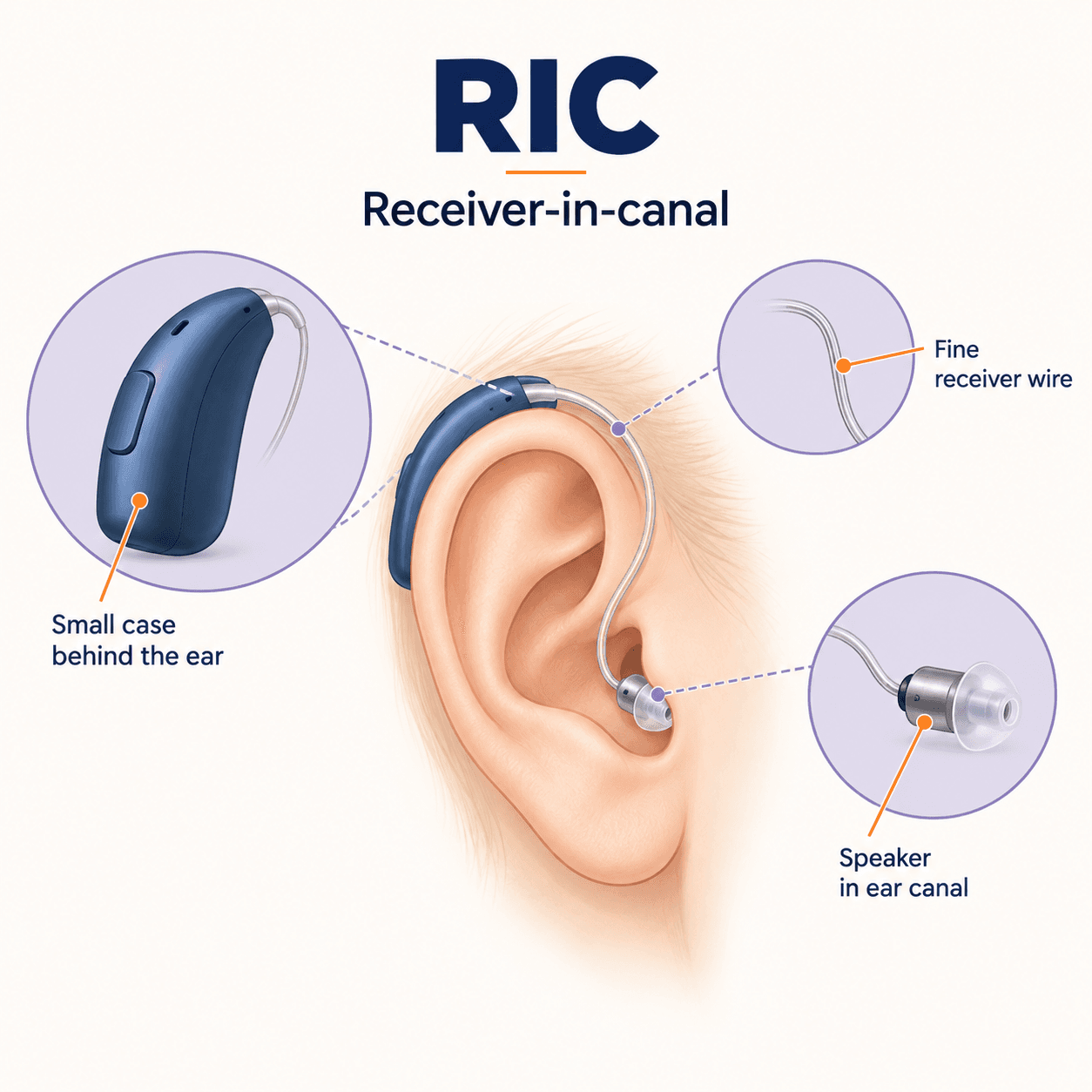
RIC
Receiver-in-canal
The most commonly fitted style. A small case behind the ear with a fine wire to a speaker in the canal. Discreet, comfortable and suits most losses.
Best for: mild to severe loss, first-time wearers
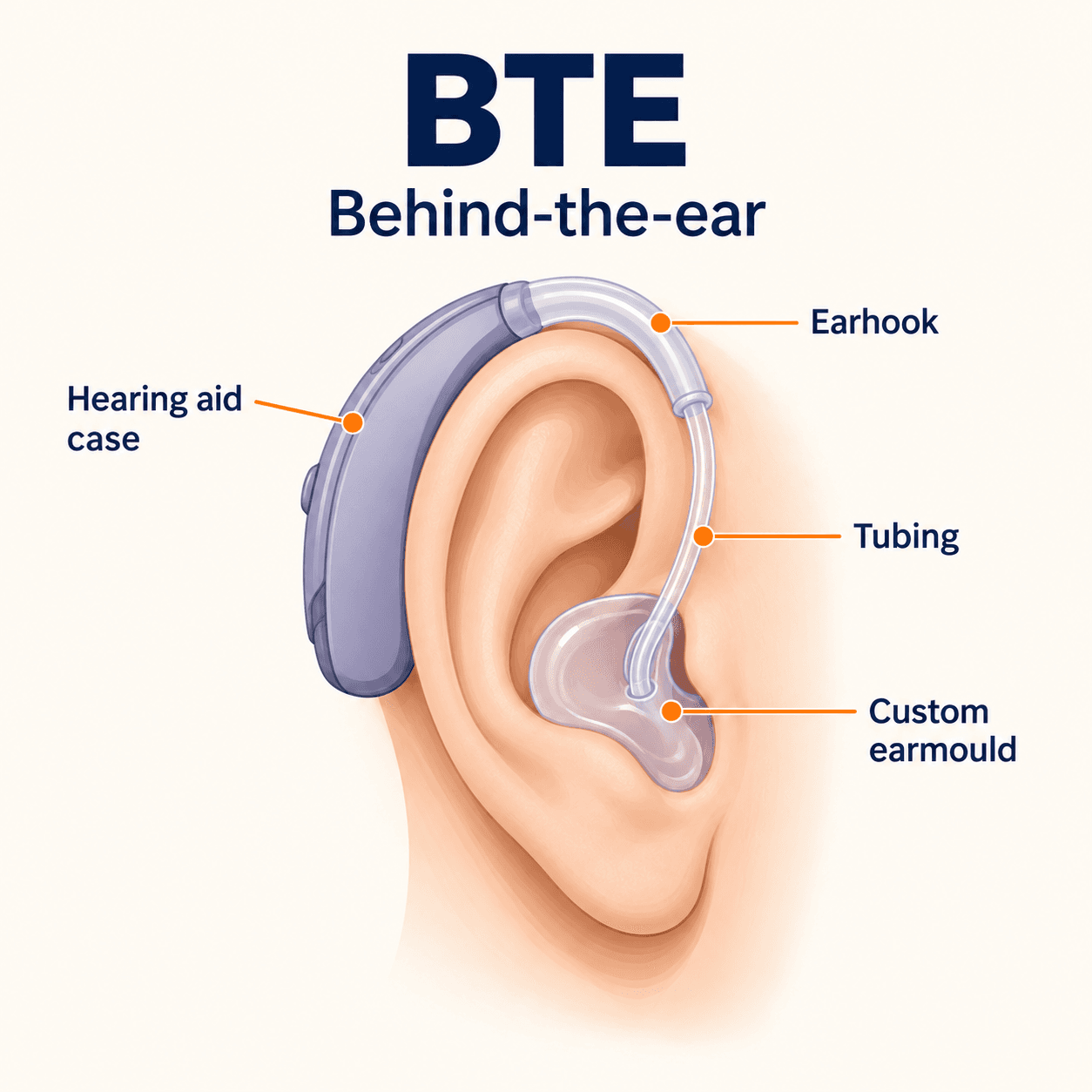
BTE
Behind-the-ear
A slightly larger case behind the ear joined to a custom earmould. Robust, easy to handle and the standard choice for children.
Best for: children, severe loss, dexterity issues
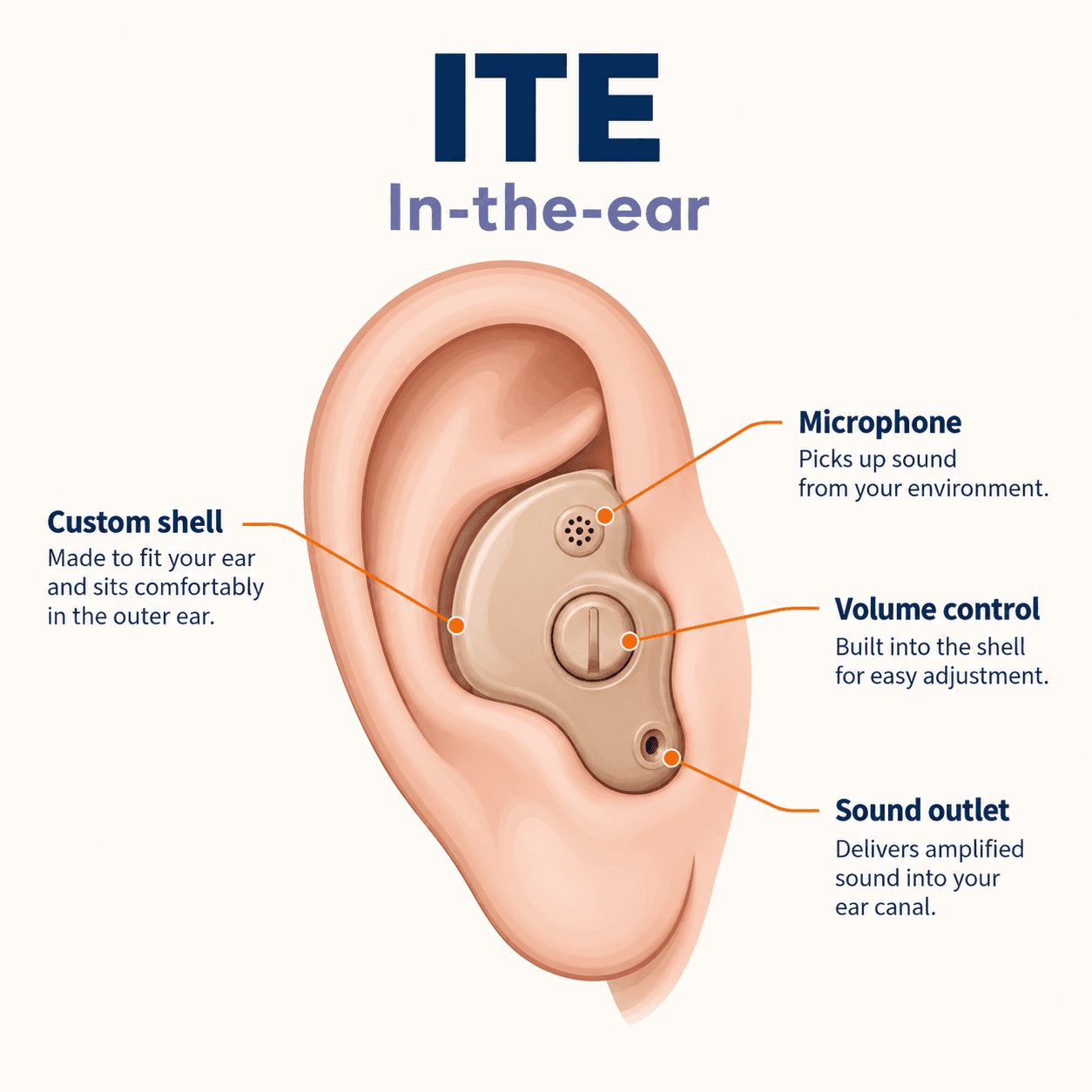
ITE
In-the-ear
Custom-made to fill the outer ear, with all electronics in the one shell. Larger controls and no wire behind the ear.
Best for: glasses wearers, easier handling
Other ways we can help
Custom hearing protection
Moulded to your ears from impressions taken in clinic. Filtered plugs for musicians, high-attenuation plugs for mine sites and industry.
Read about custom hearing protectionTinnitus hearing assessment
A diagnostic tinnitus hearing assessment first, then a management plan tailored to sleep, concentration and communication.
Read about tinnitus hearing assessment