

Types of hearing loss
Mixed hearing loss: when both types occur together
Mixed hearing loss occurs when conductive hearing loss and sensorineural hearing loss are present in the same ear. This means there is both a permanent hearing loss affecting the inner ear or hearing nerve and an additional hearing loss affecting how sound travels through the outer or middle ear.
The short answer
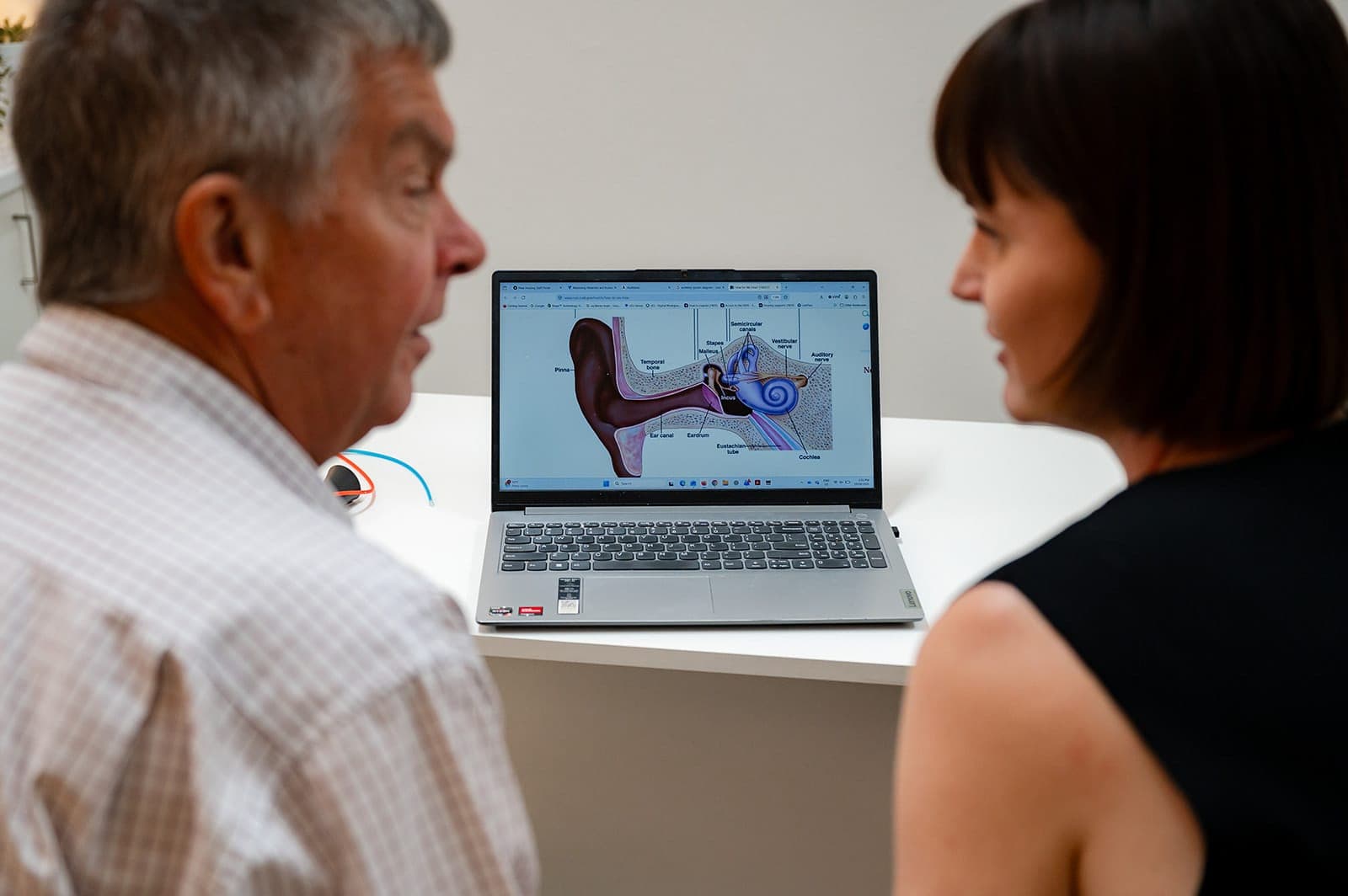
Why separating the two components matters
If you only measure how well someone hears, you cannot tell which part of the ear is at fault. Bone conduction testing bypasses the outer and middle ear and measures the cochlea directly. The gap between the air and bone results is the conductive component — and that gap is often the part you can do something about.
How we treat it
Deal with the conductive component first where possible — wax removal, medical or ENT management of middle ear disease. Then reassess. The remaining sensorineural loss is managed with hearing aids programmed to the corrected audiogram, which is why we retest rather than fitting devices to the original result.
What a mixed loss assessment includes
- Otoscopy of the ear canal and eardrum
- Tympanometry to measure middle ear function
- Air conduction testing for overall hearing
- Bone conduction testing to isolate cochlear function
- Speech testing to establish real-world impact
Get a clear answer about your hearing
Independent audiology across Andergrove, Walkerston, Moranbah and Clermont.