

Causes & conditions
Age-related hearing loss (presbycusis)
The gradual, symmetrical hearing loss that affects most people eventually. Slow enough that family usually notices years before you do.
The short answer
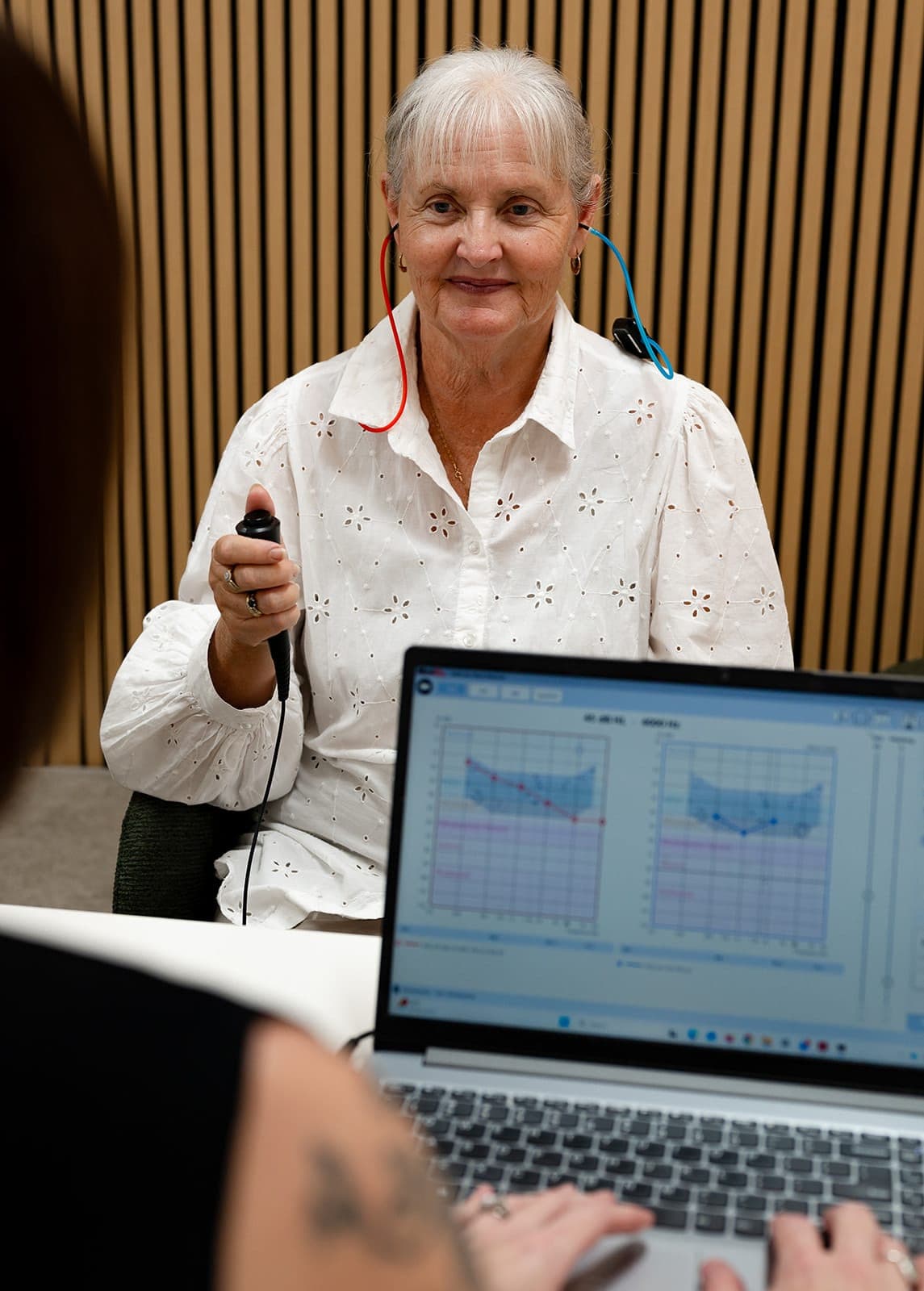
Why speech becomes unclear rather than quiet
High-frequency hearing carries the consonants — s, f, th, sh, k. Vowels are low frequency and stay audible. So you continue to hear that someone is talking while losing the sounds that distinguish one word from another. This is why turning the volume up helps less than people expect.
The seven-year gap
On average people wait around seven years between first noticing a problem and doing something about it. In that time conversation becomes tiring, social occasions get quietly avoided, and the auditory brain gets less practice at processing speech. Acting earlier makes adaptation to hearing aids considerably easier.
What treatment looks like
A diagnostic hearing test, then honest advice. Not everyone with mild age-related loss needs hearing aids immediately, and we will tell you if monitoring is the better option. When devices are appropriate they are fitted to your prescription, verified in your ears, and reviewed over time by the same audiologist.
Common first signs
- Difficulty following conversation with background noise
- Asking people to repeat themselves, particularly women and children
- Turning the television up beyond what others find comfortable
- Struggling on the phone
- Feeling exhausted after social gatherings
Get a clear answer about your hearing
Independent audiology across Andergrove, Walkerston, Moranbah and Clermont.