

Hearing loss
Types of hearing loss, explained by an audiologist
What each type of hearing loss is, what causes it, whether it can be treated and what to do next.
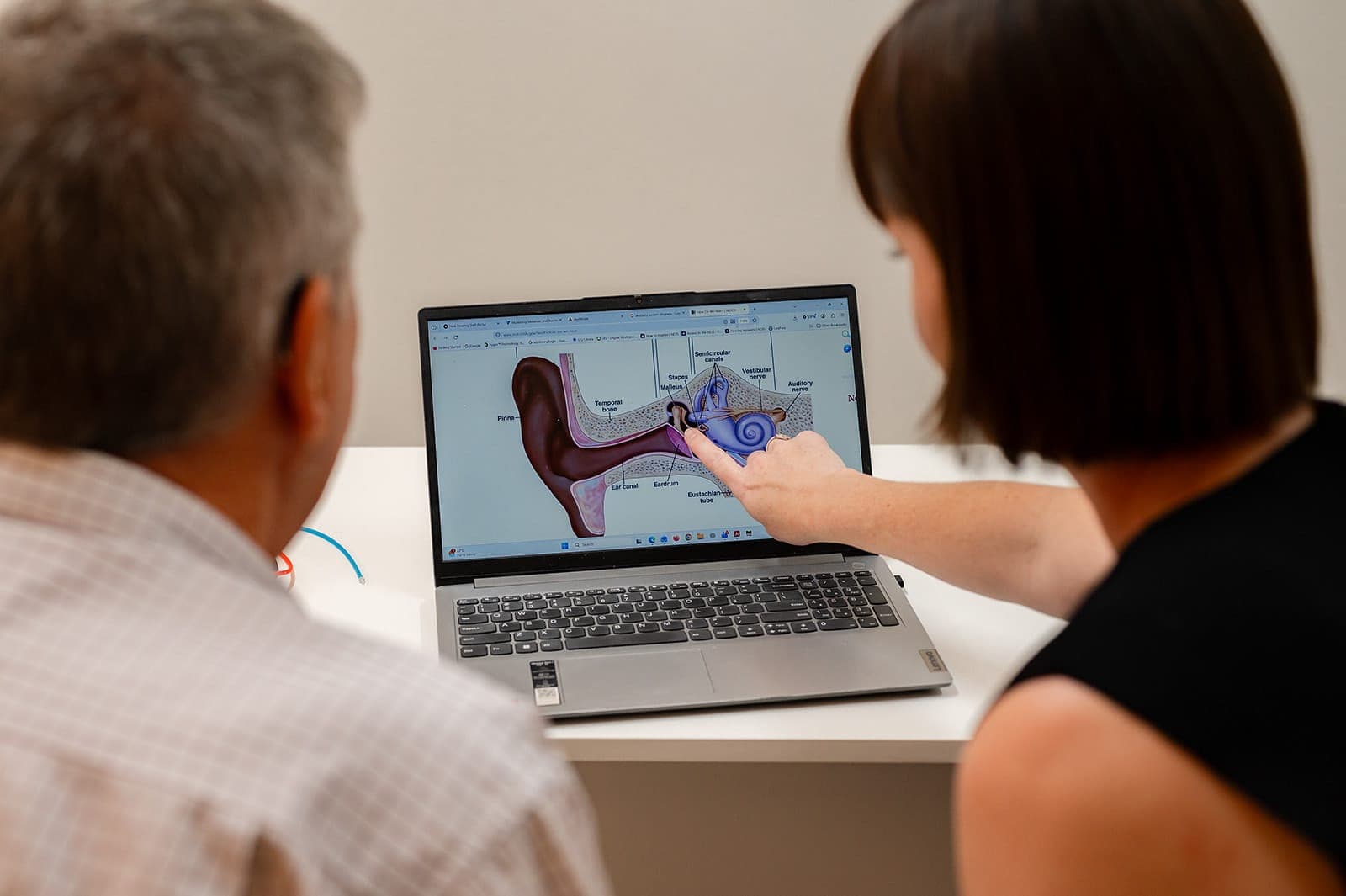
The short answer
Hearing loss is classified as sensorineural (damage to the cochlea or hearing nerve, usually permanent), conductive (a blockage or problem in the outer or middle ear, often treatable) or mixed (both together). A diagnostic hearing test identifies which type you have, and that determines the treatment.
The four types we assess

Sensorineural hearing loss
Approximately one in six Australians experience hearing loss, with sensorineural hearing loss (SNHL) being the most common form of permanent hearing loss in adults. Its prevalence increases with age, and while it is generally irreversible, modern hearing technology can make a significant difference to everyday communication.
What causes it
Ageing accounts for a large share of cases, but in this region occupational noise is just as significant — mining, heavy machinery, workshops, firearms and cane harvesting all cause cumulative cochlear damage. Other causes include certain medications, some illnesses, sudden viral events and genetics.
How it is managed
A diagnostic hearing test establishes the degree and shape of the loss in each ear. From there, most people do well with hearing aids fitted and verified to their prescription, supported by communication strategies. A referral from a doctor can enable a Medicare rebate for the hearing assessment.

Conductive hearing loss
The most common hearing loss in children, and frequently temporary and treatable
What causes it
A child with fluid behind both eardrums can pass a screening one week and be significantly down the next. During the years a child is learning to talk, that fluctuation means the sound coming in is inconsistent — some days clear, some days muffled.
How it is managed
Treatment is often practical: earwax removal through microsuction, medical management of infection, ENT referral for grommets or eardrum repair, and monitoring over months to see whether it resolves.

Mixed hearing loss
Mixed hearing loss occurs when conductive hearing loss and sensorineural hearing loss are present in the same ear. This means there is both a permanent hearing loss affecting the inner ear or hearing nerve and an additional hearing loss affecting how sound travels through the outer or middle ear.
What causes it
If you only measure how well someone hears, you cannot tell which part of the ear is at fault. Bone conduction testing bypasses the outer and middle ear and measures the cochlea directly. The gap between the air and bone results is the conductive component — and that gap is often the part you can do something about.
How it is managed
Deal with the conductive component first where possible — wax removal, medical or ENT management of middle ear disease. Then reassess. The remaining sensorineural loss is managed with hearing aids programmed to the corrected audiogram, which is why we retest rather than fitting devices to the original result.
Auditory processing disorder (APD) assessment
Normal hearing on the test, real difficulty making sense of speech in noise.
What causes it
Children from around seven years, once the auditory system is mature enough for the tests to be valid, and adults who notice the same pattern.
How it is managed
A longer appointment than a standard hearing test. We confirm normal peripheral hearing first, then run a battery of tests examining how well the auditory system handles degraded speech, competing messages in each ear, timing differences. You receive a detailed report with specific, practical recommendations.
Degrees of hearing loss
| Degree | Hearing threshold | What it is like day to day |
|---|---|---|
| Normal | ≤20 dB HL | Soft sounds such as a whisper or rustling leaves are heard without effort |
| Mild | 21–45 dB HL | Soft speech and conversation in background noise are hard to follow; the TV creeps up |
| Moderate | 46–65 dB HL | Normal conversation is hard without hearing aids, especially in groups |
| Severe | 66–90 dB HL | Loud speech is needed; hearing aids are essential and lip-reading helps |
| Profound | >90 dB HL | Very loud sounds only; hearing aids may give limited benefit and other options are discussed |
Thresholds follow the classification used by Australian audiologists; the degree in each ear can differ.
Causes and conditions
Noise Induced Hearing Loss
Entirely preventable, completely permanent. The most common occupational injury in the region, and the one we would much rather catch at 34 than treat at 55.
Read about noise induced hearing lossAge-related hearing loss (presbycusis)
The gradual, symmetrical hearing loss that affects most people eventually. Slow enough that family usually notices years before you do.
Read about age-related hearing loss (presbycusis)Glue ear, otitis media and ear infections in children
Fluid behind the eardrum causing hearing that comes and goes. The most common cause of childhood hearing loss, and the subject of Dr Alison Collins’s PhD.
Read about glue ear, otitis media and ear infections in childrenEar Microsuction
Microsuction is a gentle and effective method of removing earwax and debris from the ear canal.
Read about ear microsuctionTinnitus assessment and management
Ringing, buzzing or hissing with no external source. It cannot always be eliminated, but it can almost always be made much easier to live with.
Read about tinnitus assessment and management